


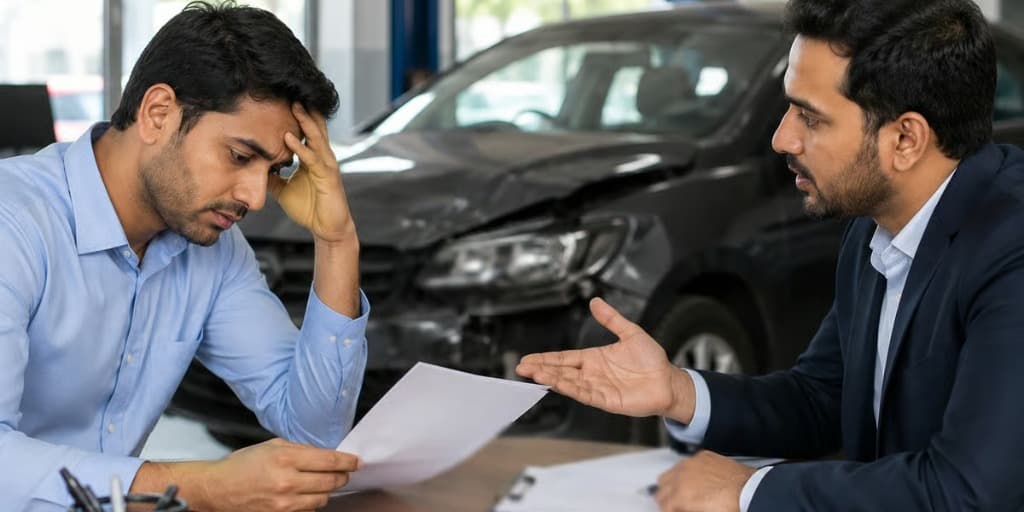
Seeing the words ‘claim rejected’ in your insurer's email can be quite frustrating. You paid the premium on time, kept the policy active, and trusted the system. Now the very policy you bought for protection has refused to pay. The good news is that a rejection is rarely the end of the road. India has a clear, structured appeal system that gives every car owner a fair chance to fight back.
Most claim rejections in India happen for the same set of reasons. Knowing these reasons in advance helps you avoid them. And if your car insurance claim rejected status feels unfair, you have four levels of escalation available, all the way up to the consumer court. The earlier you act and the more documents you keep, the higher your chances of resolving the grievance.
This complete guide walks you through the top 10 claim rejection reasons in India, the four-step appeal ladder you can use to challenge the insurer, the realistic timeline for each stage, and the proactive steps you can take to prevent rejection in the first place. By the end, you will know exactly how to handle a rejected claim and what to do next.
Top 10 Claim Rejection Reasons in India
Insurers reject claims for a variety of reasons. Some are policy violations. Some are paperwork issues. Some are simply common mistakes. Here are the ten common claim rejection reasons that account for the majority of disputes in India.
1. Expired Policy
This is the most basic insurance rejection reason. If your policy was not active on the day of the incident, the insurer has no obligation to pay. Even a one-day gap can be enough. That is why it is important to renew on time, and never assume that grace periods give you full claim cover.
2. Drunk Driving
If the driver of the car was under the influence of alcohol or drugs at the time of the accident, the claim is rejected. The police report and medical test record are usually enough proof for the same. A claim rejected drunk driving case rarely succeeds even on appeal, since this is a clear policy exclusion.
3. Unlicensed Driver
The driver of a vehicle must hold a valid driving licence for the vehicle category. If the licence was expired, suspended, or for a different vehicle category (for example, a two-wheeler licence holder driving a car), the claim is usually rejected.
4. Delayed Intimation (Beyond 48 Hours)
Most policies require you to inform the insurer within 24 to 48 hours of the incident. An insurance claim rejected for late intimation is one of the most common rejections in India. Even genuine claims fail if the call to the helpline comes days later.
5. Wrong or Incomplete Information at Policy Purchase
If you provided incorrect details at the time of buying the policy, such as wrong IDV, wrong engine capacity, or hiding past damage, the insurer can duly reject the claim. In these cases, the insurer argues the policy was issued on misrepresented facts.
6. Excluded Damage
Some types of damage are excluded under standard policies. Tyre and tube damage not linked to an accident, mechanical breakdown, consumables, and wear and tear are common exclusions to consider in such cases. Always read your policy wording before assuming a claim will be paid.
7. Commercial Use on a Personal Policy
If you use your private car as a taxi, for ride-sharing services, or for any commercial purpose, claims arising from such usage are typically rejected. The policy type must match the actual vehicle use.
8. No FIR for Theft Claim
A theft claim cannot be processed without an FIR from the police. Some car owners try to settle theft cases privately or delay the FIR. This is a sure path to claim rejection.
9. Wear and Tear
Damage from normal ageing of the car, rust, corrosion, paint fading, or routine mechanical issues is never covered. Insurers cover sudden, accidental, and external events, not the slow decline of parts over time.
10. Driving Without a Valid PUC or Fitness Certificate
Some insurers reject claims if the car was being driven without a valid Pollution Under Control (PUC) certificate, provided that the PUC non-compliance directly contributed to the accident/damage. The same applies to commercial vehicles missing a valid fitness certificate. The exact rule varies by insurer, so check your policy wording.
These ten reasons cover the bulk of all rejections in India. If your rejection letter mentions any of these, it does not mean you cannot appeal. It just means you need stronger documentary evidence to support your case.
How to Appeal: Complete Process and Redressal Channels
If you file a car insurance claim, and it has been rejected, and you believe the decision is unfair, there is a four-step insurance claim appeal ladder in India. You climb it one step at a time. Each step has its own process, timeline, and authority.
Channel 1: Insurer Grievance Cell
Your first stop towards a rejected claim redressal is the insurer's own grievance redressal cell. Every general insurer in India must have one under the IRDAI rules.
To solve your issue via this channel, write a formal complaint email or fill out the grievance form on the insurer's website. When doing so, remember to mention your policy number, claim number, rejection reason, and why you believe the decision is wrong. Attach all relevant documents for better and faster resolution.
As per the IRDAI rules, the insurer must respond to this complaint within 15 days. Many disputes are resolved at this stage itself, especially if the rejection was based on a small documentation issue or a misinterpretation.
Channel 2: IRDAI Bima Bharosa Portal
If the insurer's grievance cell does not respond within 15 days or rejects your appeal, the next step you have is the IRDAI’s Bima Bharosa Portal, which replaced the earlier Integrated Grievance Management System (IGMS) portal.
- Visit the official website of the IRDAI Bima Bharosa portal.
- Click on the ‘Register Complaint’
- Fill in the complaint details and upload all relevant documents
- The complaint will then be registered, and you will get a complaint tracking number
Once registered, IRDAI will forward your complaint to the insurer with a tighter timeline (14 days) for response. This often pushes the insurer to reconsider. If you are wondering how to file complaint with IRDAI, this portal is the official route.
Channel 3: Insurance Ombudsman
If IRDAI's intervention does not solve the issue, you can approach the Insurance Ombudsman. India has 17 Ombudsman offices across major cities. Each has a defined territorial jurisdiction.
The Ombudsman handles disputes up to Rs 50 lakh in claim value. To approach the Ombudsman, you file a written complaint along with all evidence. The Ombudsman then holds a hearing where both you and the insurer present your case. A decision is usually given within three months.
The Ombudsman's award is binding on the insurer if you accept it. Nonetheless, you still retain the right to escalate to court if you do not. IRDAI ombudsman complaint outcomes have historically favoured policyholders in around 60 to 70% of cases where evidence is strong.
Channel 4: Consumer Court
The final escalation channel to resolve an insurance rejection dispute is to file a case in the consumer court. The court jurisdiction and other details depend on the claim amount.
District Commission handles cases up to Rs 50 lakh. State Commission handles cases between Rs 50 lakh and Rs 2 crore. The National Commission handles cases above Rs 2 crore. While the jurisdiction may be different, consumer court insurance cases follow standard legal procedure. You can represent yourself or hire an advocate for the same. The court can order the insurer to pay the claim along with compensation, interest, and legal costs. Decisions usually take 6 to 24 months, depending on the court's caseload.
Appeal Timeline: How Long Each Step Takes
The full appeal process has clear timelines. Knowing these helps you plan.
- Insurer grievance cell: Up to 15 working days for response.
- IRDAI Bima Bharosa portal: 15 days to push the insurer for a final answer.
- Insurance Ombudsman: Within 1 year for a hearing and decision.
- Consumer court: 1-2 years for the final order.
Stay patient and well-documented. Each escalation step builds on the evidence and exchanges from the previous one. Throwing away papers between stages is a common mistake that weakens your case.
How to Prevent Rejection: Proactive Tips
The best way to handle a rejection is to never get one in the first place. These eight habits prevent the most common claim rejection reasons.
- Renew on time. Set a calendar reminder 30 days before expiry. Never let your policy lapse, even for a day.
- Provide accurate details at policy purchase. Double-check IDV, engine capacity, RTO location, and previous claim history. Small errors here become rejection reasons later.
- Inform the insurer within 24 hours. The 24-48 hour intimation window is critical. Call the helpline immediately after any incident, even a minor one.
- Never drink and drive. This single mistake voids your entire claim, no matter how serious the damage.
- Use your car only as registered. Personal policies cover personal use. Commercial use requires a different policy type.
- File an FIR for serious incidents. Theft, third-party injury, and major property damage need a police report. Do this within 24 hours.
- Read your policy wording. Spend 30 minutes reading the exclusions section. Knowing what is not covered prevents false expectations.
Keep documents organised. RC, driving licence, policy, PUC, and FIR should be safely stored in cloud and physical form. Quick access during a claim saves time and stress.
Insurance Claim Rejection: What To Remember
A rejected car insurance claim feels like a wall, but it is usually just a door with the wrong key. The Indian insurance system has multiple safeguards for policyholders, from the insurer's own grievance cell to the consumer court. The four-step appeal ladder gives you fair chances at every level, especially if you have documentation, patience, and a clear understanding of why the claim was rejected.
Knowing the top claim rejection reasons in advance is your first defence. Acting fast, gathering all evidence, and using the IRDAI ombudsman route when needed is your second. The insurance claim appeal process is built to be fair, but it rewards those who come prepared. Use this guide as a step-by-step playbook when you face any rejection, and you will give yourself the strongest possible chance of recovering what is rightfully yours.
Note: This article has been vetted by Siddarth Khandelwal, an Insurance expert at Insure24.
FAQs
Q. Why are car insurance claims rejected most often?
The most common reasons for claim rejection include late notification to the insurer, expired insurance policy, drunk driving, use of an unlicensed driver, and damages excluded under the policy, such as wear and tear or mechanical failure. Understanding these reasons helps policyholders avoid mistakes during the claims process.
Q. Can I appeal a rejected car insurance claim?
Yes. You can challenge a rejected claim by escalating the issue through the insurer’s grievance redressal cell first. If unresolved, you may approach the IRDAI Bima Bharosa portal, the Insurance Ombudsman, or even the consumer court, depending on the claim amount and supporting evidence available.
Q. How do I file a complaint with IRDAI?
Visit the IRDAI Bima Bharosa Portal and register a new complaint using your policy number, insurer details, and claim information. Upload all supporting documents such as claim forms, rejection letters, and communication records. Once submitted successfully, your complaint will be officially registered for review and resolution.
Q. What if my claim was rejected for late intimation?
You can still appeal the rejection decision by providing a valid written explanation for the delay, such as hospitalisation, medical emergencies, travel abroad, or unavoidable circumstances. Supporting documents can strengthen your case, and insurers may reconsider the matter sympathetically during the grievance redressal or review process.
Q. What if my claim was rejected for drunk driving?
Claims rejected due to drunk driving are usually difficult to reverse because intoxication is a standard exclusion in most motor insurance policies. Unless you can prove the alcohol test was inaccurate or the driver was not under the influence, the insurer is unlikely to approve the appeal request.
Q. Is there a cost to file an appeal?
No fee is charged for filing complaints through the insurer’s grievance cell, the IRDAI Bima Bharosa portal, or the Insurance Ombudsman. However, if you decide to approach a consumer court, a nominal filing fee may apply depending on the total claim amount involved in the dispute.
Q. Can I directly approach the consumer court without going through IRDAI?
Yes, you can approach the consumer court directly without filing a complaint with IRDAI first. However, courts generally prefer that policyholders exhaust internal grievance mechanisms and Ombudsman remedies before litigation. Following this structured escalation process may strengthen your legal position and improve credibility before the court.
Q. Does an IRDAI complaint affect my future policies?
No. Filing a complaint with IRDAI does not negatively impact your insurance profile or future policy purchases. Complaints are handled independently and neutrally by the regulator. You remain free to renew with the same insurer or buy motor insurance policies from any other company without restrictions.
Q. Can I file an Ombudsman complaint for a partial rejection?
Yes. The Insurance Ombudsman can hear disputes involving both complete claim rejections and partial settlements where the payout amount is lower than expected. If the disputed claim amount is within the prescribed limit of Rs 50 lakh, you can formally challenge the insurer’s decision through the Ombudsman process.








An add-on called zero depreciation auto insurance ensures that you get the full replacement cost of any damaged parts by doing away with depreciation deductions during claims. This accessory, which is best suited for new and expensive cars, lowers out-of-pocket costs while offering financial stability and peace of mind. The advantages outweigh the costs, particularly for individuals who drive frequently and live in high-risk locations, even when premiums go up. Consider the age of your car, your driving style, and your financial situation while looking into zero depreciation insurance in India. Locate the best coverage by comparing insurers and policies. To find the greatest auto insurance alternatives, go to INSURE24.

Licenced by

COMPANY
PRODUCTS
RESOURCES
LEGAL
Cars24 Financial Services Private Limited
(Wholly owned subsidiary of Cars24 Services Private Limited)
Corporate Office - 6th Floor, SAS Tower-C, Ch Baktawar Singh Road, Medicity Sector 38, Shivaji Nagar,
Gurgaon - 122001, Haryana
IRDAI Corporate Agency Registration No: CA0710 | License Category: Composite |
CIN: U65990HR2018PTC075713
Disclaimer : The information contained in this website is presented purely for information purposes only provided as service to the internet community at large. It does not constitute insurance advice and we do not guarantee the accuracy, adequacy or the completeness of the information contained here.


Licenced by
COMPANY
PRODUCTS
RESOURCES
LEGAL
Cars24 Financial Services Private Limited
(Wholly owned subsidiary of Cars24 Services Private Limited)
Corporate Office - 6th Floor, SAS Tower-C, Ch Baktawar Singh Road, Medicity Sector 38, Shivaji Nagar,
Gurgaon - 122001, Haryana
IRDAI Corporate Agency Registration No: CA0710
License Category: Composite
CIN: U65990HR2018PTC075713
Disclaimer : The information contained in this website is presented purely for information purposes only provided as service to the internet community at large. It does not constitute insurance advice and we do not guarantee the accuracy, adequacy or the completeness of the information contained here.