


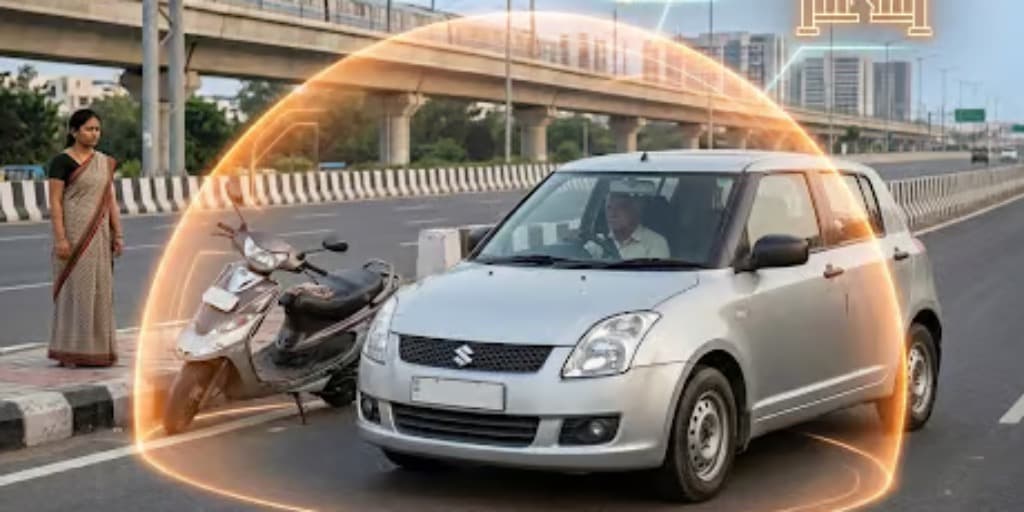
Every car on an Indian road needs a mandatory insurance cover. The most basic form of it is third-party car insurance. It is the minimum the law mandates, yet most owners barely understand it. This guide explains everything you need to know about a third-party cover in plain words, including what it pays for and what it skips, along with the latest IRDAI third-party rates. By the end of this guide, you will know if third-party insurance coverage suits your car and what happens when someone files a claim against you. Let us begin.
What is Third-Party Car Insurance Under the Motor Vehicle Act?
Third-party car insurance is a legal contract. You are the first party, the insurer is the second party and anyone your car harms is the third party. A third-party policy pays for harm your car causes to others. This includes their injury, death, or property loss. Unlike a comprehensive policy, a third-party policy does not pay for your own car.
Under section 146 of the Motor Vehicles Act, 1988, a third-party cover is a compulsory requirement for anyone to legally drive in India. This is why TP insurance mandatory rules exist across India. Driving without it is a punishable offence, with a Rs. 2,000 fine for the first offence and a Rs. 4,000 fine for a subsequent offence, along with a potential 3-month jail time. The reason behind this punitive action is public safety. Since road crashes hurt innocent people every day, this cover ensures victims get paid, and their families are protected from sudden financial shock. It also shields the policyholder from large legal claims.
What Does a Third-Party Policy Cover: A Detailed Breakdown
For those wondering what does third party car insurance covers in India, in real terms? The answer is a three-fold advantage, with each part protecting a different risk. This is the heart of any TP car insurance India plan, and here is its complete breakdown:
Third-Party Death or Injury With Unlimited Liability
The strongest part of a TP cover policy is that it pays for injury or death your car causes to others. There is no fixed upper limit on this amount.
The Motor Accident Claims Tribunal decides the payout, and the aggregate figure often depends on the victim's age, income, and dependents. Claims can therefore run into many lakhs of rupees. With a third-party insurance cover, your insurer pays this exact amount on your behalf.
Third-Party Property Damage Limit of Rs 7.5 Lakh
The property damage cover of a TP policy pays for damage your car causes to the property of others. Think of a dented car or a broken gate. The third-party property damage limit, however, is capped at up to Rs 7.5 lakh. This means that the cover pays up to Rs 7.5 lakh for such damage. Anything above that comes from your own pocket. For most small crashes, this limit is enough.
Personal Accident Cover Worth Rs 15 Lakh
This part of a TP cover protects you, the owner-driver. It pays up to Rs 15 lakh for your death or disability, provided that the accident involves your insured car. While the PA cover is separate, it is still a linked requirement. This is why many insurers bundle it with the base policy.
What a Third-Party Insurance Coverage Does Not Cover
The biggest weakness of third-party insurance coverage is the fact that it does not protect your own car at all. This gap surprises many first-time buyers. But knowing what does third party cover, and what it skips saves you from unpleasant surprises later on.
Here is what the policy does not pay for:
- Own car damage from any accident
- Theft of your vehicle
- Fire or explosion damage to your car
- Floods, storms, or earthquake damage
- Riots or vandalism affecting your car
- Engine damage from water or oil
- Personal items were stolen from your car
For those still wondering, does third party cover own car damage? The answer is no. If your car is damaged, you pay the full repair bill. So, is third party car insurance enough for everyone? For most owners, the honest answer is no. The gap is simply too wide, both practically and financially. The TP vs own damage ultimately decides how the overall claim experience is for your pockets.
This is why it is always a smarter decision to buy your own damage cover that pays for your car's repair after a crash. A comprehensive policy, on the other hand, combines both covers in one policy and is a much better-suited option for overall protection.
IRDAI TP Rates by Engine Capacity for 2025-26
The third party car insurance premium is not set by insurers. The IRDAI third-party rates are fixed by the regulator each year in consultation with the MoRTH. Every insurer charges the same amount for the same car, irrespective of any mitigating factors. The only variable is your car's engine size. Here is the official rate table for 2026:
| Engine Capacity | Annual TP Premium |
|---|---|
| Up to 1000 cc | Rs 2,094 |
| 1001 cc to 1500 cc | Rs 3,416 |
| Above 1500 cc | Rs 7,897 |
These rates exclude 18% GST. The tax is generally added at checkout. So your final third party car insurance cost is a little higher than the base premium rate. For example, for a third party car insurance premium for a 1200 cc car like the Hyundai Grand i10 Nios is Rs. 3,416 before GST. While these rates have stayed stable for several years, the regulator reviews claim data each year to decide if a change is needed. For private cars, recent years, however, have seen no major rise.
Note: New cars get a three-year TP policy cover at purchase. This rule came from a 2018 Supreme Court order, in consonance with which TP car insurance India market now offers these bundled plans. The own damage part still renews each year.
Who Should Buy a Standalone Third-Party Car Insurance?
A pure third-party plan suits only a specific group of people. Knowing if a pure third-party plan has a good use car for you is a smart thing that can help you make a better and more financially viable insurance decision. Here are cases where a pure TP plan might suit you:
Old Cars Above 10 Years
Old cars lose most of their market value. Their insured value drops sharply each year. A 12-year-old car may be worth under Rs 1 lakh, while a 7-year-old car might have already lost 70% of its value. For such cars, own damage cover gives only a little payout. The premium, therefore may not be worth it. So, is third party insurance for old car worth it? Well, the answer is yes, it often is. A pure third-party plan is good enough to help you ensure legal compliance while at the same time offering a high affordability quotient.
Low-Value Cars
Some cars have a low resale price even when newer. If yours is worth under Rs 1.5 lakh, the math shifts. You may be able to absorb repairs yourself. In this case, third party insurance online is the cheap and simple route. It meets the law without the extra spending.
Budget-Conscious Owners
There are several car owners who either drive rarely or keep vehicles only as a second priority transport. These are the cases where paying for your own repairs might be a more sensible option. But before jumping into the decision, weigh the risk first. One theft or major crash can cost lakhs. Only pick this route if you can truly bear that loss.
When a TP Car Insurance India Is Not Enough
For many owners, TP car insurance in India alone is a risky choice. While a pure TP policy might suit many, there are certain buyer profiles for whom a pure TP plan can never work out. These include:
- New cars with a high market value and costly parts. A small repair here can cost Rs 20,000 or more. A pure TP plan, thus, will leave you fully exposed. Comprehensive cover is the safe choice here.
- Financed cars cases where the banks treat your car as loan security. Most lenders require comprehensive cover until the loan ends, since they want the asset protected against total loss. So if you drive a financed vehicle, a pure TP plan is not on the cards for you.
- High-value cars need a wider cover too. Repairs on premium cars are very costly. A bumper alone can cost Rs 50,000. A flooded engine can cost Rs 2 lakh. TP cover pays none of this.
In all three cases listed above, the TP vs own damage gap is too large. The extra premium for own damage here is smaller than the overall financial protection the plan claims to offer. For most active owners, comprehensive cover wins easily.
How to Buy Third-Party Insurance Online in Minutes
Buying third party insurance online is fast and simple. The whole process takes under ten minutes. There is no paperwork or agent visit. Here are the steps to purchase a third party car insurance plan online:
- Visit an insurer website or a trusted comparison site
- Enter your car registration number
- Confirm the make, model, and engine size
- Select the third party plan option
- Check the premium, which matches the IRDAI rate
- Pay by UPI, card, or net banking
- Receive the policy by email within minutes
Keep a digital copy on your phone. Save another in cloud storage. You may need it at a police check or toll plaza. Since the third party car insurance premium is fixed, make sure to pick an insurer with a strong claim record and good support. Also, remember to renew before the expiry date each year
How a Third-Party Car Insurance Claim Works Against You
Now that you know almost everything about third party car insurance, a question that often bugs many buyers is what happens when a third party files a claim against you? This is where this cover truly proves its worth.
Imagine your car injures a pedestrian or hits another vehicle. The victim can file a claim against you. They do this through the Motor Accident Claims Tribunal, and here is how the process typically unfolds.
- The victim files a petition at the tribunal
- The tribunal sends a notice to you and your insurer
- Your insurer steps in to defend the case
- The insurer hires lawyers on your behalf
- Both sides present evidence and arguments
- The tribunal decides the final compensation
- Your insurer pays the awarded amount
The key point is simple. Your insurer handles the cost and the legal defence. You do not pay the compensation yourself. This is the core value proposition of third party insurance coverage. Without this cover, you would face the claim alone. You would pay lawyers and any award from your savings. A single serious case can cost many lakhs. This is the real reason the law makes the cover compulsory.
Third-Party Car Insurance in India: Final Thoughts
Third-party car insurance is the legal floor for every car. It protects others from harm your car may cause. It is cheap, fixed in price, and simple to buy. But it leaves your own car fully unprotected. For old or low-value cars, this trade-off can make sense. For new, financed, or costly cars, it does not. The own damage gap is simply too wide for most owners. Knowing your buyer profile, use case and ultimate financial repercussions of buying a third party car insurance can help you make an informed decision every time.
Note: This article has been vetted by Siddarth Khandelwal, an Insurance expert at Insure24
FAQs
Q. What does third party car insurance cover in India?
Third party car insurance covers harm your car causes to others. This includes their injury, death, and property damage up to Rs 7.5 lakh. It also gives the owner-driver a personal accident cover of Rs 15 lakh. It never pays for your own car's damage.
Q. Is third party car insurance enough for my car?
For old or low-value cars, third party cover may be enough. For new, financed, or costly cars, it is not. A pure plan leaves your own car fully exposed to crashes, theft, and floods. Most active owners need comprehensive cover for proper protection and peace of mind.
Q. What is the third party car insurance premium for 1200cc cars?
The third party car insurance premium for 1200cc cars is Rs 3,416 per year. This car falls in the 1001 to 1500cc slab. The figure is before GST. After adding 18% GST, the final amount is slightly higher. This rate is fixed by IRDAI for all insurers.
Q. Does third party cover own car damage at all?
No, it does not. When you ask what does third party cover, the answer is harm to others only. It never pays for your own car's damage. To protect your own car, you need own damage cover. A comprehensive policy combines both covers into one simple plan.
Q. Is third party insurance for old car worth it?
Yes, for cars above ten years with low value. The insured value of an old car is small. So own damage cover offers little payout. A third-party plan keeps you legal at the lowest cost. It is often the smartest choice for ageing vehicles.
Q. Why is TP insurance mandatory in India?
TP insurance is mandatory under Section 146 of the Motor Vehicles Act. The law protects innocent road accident victims. It ensures they receive compensation for injury, death, or property loss. Without this rule, many victims would get nothing. Driving without it brings fines and possible jail time.
Q. How are IRDAI third-party rates decided each year?
The IRDAI third-party rates are based on claim data from all insurers. Independent actuaries study accident and payout trends. The regulator then sets a fair rate for each engine slab. It also consults insurers and consumer groups. New rates usually apply from the start of the financial year.
Q. What is the third party property damage limit?
The third-party property damage limit of Rs 7.5 lakh applies to private cars. Your policy pays up to this amount for damage to others' property. Any cost beyond this limit, other than the mandatory deductible, comes from your own pocket. For most minor crashes, this cap is more than enough.
Q. Can I buy third party insurance online quickly?
Yes. You can buy third party insurance online in under ten minutes. Enter your car details, pick the plan, and pay digitally. The policy reaches your email within minutes. There is no paperwork or agent visit. A digital copy is valid proof of cover under the law.
Q. What is the difference in the TP vs own damage choice?
The TP vs own damage choice is about who the cover protects. Third-party cover pays for harm to others only. Own damage cover pays for your own car's repair. A comprehensive plan combines both. For most owners, the combined cover offers far better value and safety.
Q. How much does third party car insurance cost in total?
The third party car insurance cost depends only on engine size. It ranges from Rs 2,094 to Rs 7,897 per year before GST. After adding 18% GST, the amount rises a little. The rate is fixed by IRDAI. So the price is the same with every insurer.
Q. Can I add own damage cover to a third-party plan later?
Yes, but not in the middle of a policy term. You add own damage cover at renewal time. Many owners buy a standalone own damage plan instead. This lets you keep your third party insurance online and add separate protection for your own car whenever you wish.
Q. What happens if I drive after my TP policy expires?
Driving on an expired policy is illegal under the Motor Vehicles Act. You face a fine of Rs 2,000 for a first offence. Police can also seize your car. Always renew before the expiry date. Buying third party insurance online takes only a few minutes.


Licenced by

COMPANY
PRODUCTS
RESOURCES
LEGAL
Cars24 Financial Services Private Limited
(Wholly owned subsidiary of Cars24 Services Private Limited)
Corporate Office - 6th Floor, SAS Tower-C, Ch Baktawar Singh Road, Medicity Sector 38, Shivaji Nagar,
Gurgaon - 122001, Haryana
IRDAI Corporate Agency Registration No: CA0710 | License Category: Composite |
CIN: U65990HR2018PTC075713
Disclaimer : The information contained in this website is presented purely for information purposes only provided as service to the internet community at large. It does not constitute insurance advice and we do not guarantee the accuracy, adequacy or the completeness of the information contained here.


Licenced by
COMPANY
PRODUCTS
RESOURCES
LEGAL
Cars24 Financial Services Private Limited
(Wholly owned subsidiary of Cars24 Services Private Limited)
Corporate Office - 6th Floor, SAS Tower-C, Ch Baktawar Singh Road, Medicity Sector 38, Shivaji Nagar,
Gurgaon - 122001, Haryana
IRDAI Corporate Agency Registration No: CA0710
License Category: Composite
CIN: U65990HR2018PTC075713
Disclaimer : The information contained in this website is presented purely for information purposes only provided as service to the internet community at large. It does not constitute insurance advice and we do not guarantee the accuracy, adequacy or the completeness of the information contained here.