


The third-party premium portion of your car insurance is the only part you cannot negotiate. No matter which insurer you choose, or how digital or premium a platform looks, the third party car insurance rates are the same throughout.
That is because IRDAI (Insurance Regulatory and Development Authority of India) fixes these rates every year for insurance providers to follow. If you are renewing your policy, comparing quotes, or just curious why the same TP premium appears across every insurer, this guide has all the answers.
What Are IRDAI Fixed TP Rates?
The third-party premium is the legally compulsory portion of your car insurance. It pays for damage your car causes to other people, their vehicles, or their property. Under the Motor Vehicles Act, 1988, every car driven on Indian roads must carry at least this cover.
The TP premium rates IRDAI publishes are uniform across the country. All major insurance providers like ACKO, HDFC ERGO, ICICI Lombard, Bajaj Allianz, Tata AIG, as well as every other licensed insurer, charge the same TP rate for the same car engine slab. The only variable is the TP premium engine capacity slab of your car.
This uniformity exists because third-party cover protects the public, not the policyholder. IRDAI sets the rate to balance affordability for car owners with adequate financial protection for accident victims and their families. The IRDAI car insurance rates 2026 cycle continues this approach.
2026-27 TP Premium Rate Table by Engine CC
Below is the IRDAI TP rates 2026-27 reference table for private cars in India. These rates apply uniformly to all general insurers across the country.
| Engine Capacity (CC) | Annual Third-Party Premium |
|---|---|
| Up to 1000 cc | Rs 2,094 |
| 1001 cc to 1500 cc | Rs 3,416 |
| Above 1500 cc | Rs 7,897 |
This is the official third party insurance premium by CC structure used across India. The rates exclude the 18% GST that is added on top. The same car TP premium by CC slab applies to both new and renewal policies. For long-term policies issued at the time of purchasing a new car (3-year TP for private cars), the TP premium is collected upfront for the full term. IRDAI also provides a 15% discount on TP premiums for private Electric Vehicles and a 7.5% discount for Hybrid Electric Vehicles in India.
Here are a few real-world examples to better understand TP premium rates:
- Maruti Alto 800 (796 cc): TP premium of Rs 2,094 per year
- Maruti Swift VXI (1197 cc): TP premium of Rs 3,416 per year
- Hyundai Creta (1497 cc): TP premium of Rs 3,416 per year
- Toyota Innova Crysta (2393 cc): TP premium of Rs 7,897 per year
- Mahindra XUV700 (1997 cc): TP premium of Rs 7,897 per year
So how much is third party car insurance in India for your car? Find your engine capacity in the registration certificate, match it to one of the three slabs above, and you have your answer.
How Are TP Rates Decided in India?
The TP premium rates in India are set by the Insurance Regulatory and Development Authority in India, which has the authority to revise third-party rates based on market data, though rates have remained completely unchanged in recent cycles. The process is data-driven and follows a clear set of steps, including:
- Loss Data Collection: IRDAI gathers claim data from every general insurer in India for the previous financial year. This includes the number of accidents, the total claim amount paid, and the average claim size by vehicle category.
- Actuarial Review: Independent actuaries study the data to assess the actual cost of third-party claims per vehicle category. They factor in inflation, court awards, and changing accident severity.
- Stakeholder Consultation: IRDAI invites feedback from insurers, transport associations, consumer bodies, and the General Insurance Council. This helps balance industry sustainability with consumer affordability.
- Notification: Based on this review, IRDAI publishes the revised rates in an official notification. These rates come into effect from the start of the financial year, usually April 1 of each year.
This is why some years see a small increase, and a few years see no change at all. The TP rate table is never random. It is the result of months of data analysis and consultation.
Historical Rate Changes (2020 to 2027)
The third-party premium has stayed relatively stable in recent years. Here is a quick look at how rates have looked since 2020:
| Engine Capacity | 2020-21 | 2022-23 | 2024-25 | 2026-27 |
|---|---|---|---|---|
| Up to 1000 cc | Rs 2,094 | Rs 2,094 | Rs 2,094 | Rs 2,094 |
| 1001-1500 cc | Rs 3,416 | Rs 3,416 | Rs 3,416 | Rs 3,416 |
| Above 1500 cc | Rs 7,897 | Rs 7,897 | Rs 7,897 | Rs 7,897 |
For three to four consecutive years, IRDAI has not announced a major revision in the TP premium rates that IRDAI publishes for private cars. This stability is unusual when compared to earlier years, when rates moved upward by 5 to 10% annually.
The pause has come on the back of stable claim ratios, improved road safety norms, and active feedback from consumer groups. For car owners, this stability translates to predictable budgeting and easier renewal planning.
TP Premium vs Comprehensive Premium Comparison
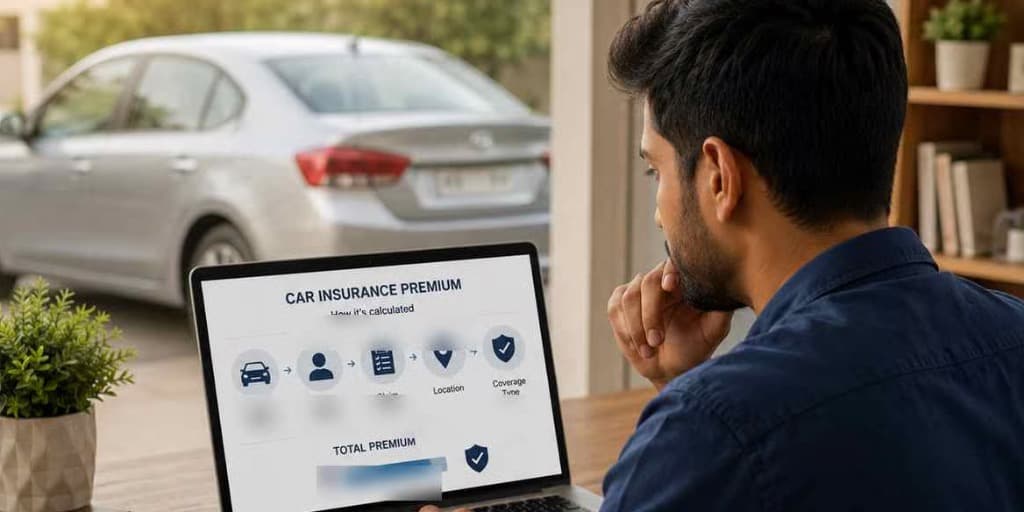
The TP premium is just a small slice of a full comprehensive policy. Here is a side-by-side view of TP premium rate for a typical mid-segment car:
Sample car: Hyundai Creta, 1497 cc, IDV Rs 11 lakh
- Third-party premium only: Rs 3,416
- Own damage premium (base): Rs 9,500
- Add-ons (zero dep, engine protection, RSA): Rs 4,000
- 18% GST: Rs 3,049
Full comprehensive premium: roughly Rs 19,965
Among the entire amount, the third party insurance cost alone is about 17% of the total comprehensive premium. The remaining 83% comes from own damage, add-ons, and GST.
This is why a pure TP policy is so much cheaper than a comprehensive plan. It also explains why opting for only TP cover leaves your own car completely exposed to accidents, theft, and natural disasters. For very old cars with low market value, a TP-only plan can make financial sense. For most other car owners, a comprehensive policy delivers far more value for a slightly higher premium.
Note: This article has been vetted by Siddarth Khandelwal, an Insurance expert at Insure24.
FAQs
Q. What are the TP premium rates IRDAI has fixed for 2026-27?
For private cars, IRDAI has fixed the third-party insurance premium at Rs 2,094 for vehicles up to 1000 cc, Rs 3,416 for cars between 1001 cc and 1500 cc, and Rs 7,897 for vehicles above 1500 cc. These are base premiums only, and an additional 18% GST is charged at the time of policy purchase or renewal.
Q. How much is third party car insurance in India for a 1200 cc car?
A 1200 cc private car falls under the 1001-1500 cc engine-capacity category defined by IRDAI. The mandatory third-party insurance premium for this slab is Rs 3,416 per year before GST. Once the applicable 18% GST is added, the final amount payable becomes higher depending on the insurer’s billing format and rounding.
Q. Are TP rates the same across all insurers?
Yes. Third-party motor insurance premiums are fixed by IRDAI and are uniform across all licensed insurance companies operating in India. Every insurer must charge the same TP premium for the same engine-capacity category. Since the pricing is regulated by the authority, policyholders cannot negotiate or receive discounts on the third-party portion of the insurance premium.
Q. What is the TP premium for a 1200cc car compared to a 1500cc car?
A 1200 cc car and a 1500 cc car are both included in the same IRDAI-defined engine-capacity slab of 1001-1500 cc. Because both vehicles fall within this category, the mandatory third-party insurance premium remains identical at Rs 3,416 annually before GST. There is no difference in TP pricing between these two engine sizes.
Q. Can I avoid paying the TP premium?
No. Paying the third-party insurance premium is legally mandatory for every vehicle owner under the Motor Vehicles Act in India. Driving a car without valid third-party insurance can lead to fines, penalties, legal action, or even imprisonment in certain cases. It is compulsory because it financially protects third parties affected by road accidents caused by your vehicle.
Q. Do TP rates include GST?
No. The third-party insurance rates published by IRDAI are base premium amounts and do not include Goods and Services Tax. At the time of purchasing or renewing the policy, insurers add 18% GST to the premium amount. Therefore, the final payable insurance cost is always higher than the officially announced TP premium rate.
Q. When do TP rates change?
IRDAI generally reviews and revises third-party motor insurance premium rates at the beginning of every financial year in India. Any changes are officially announced through regulatory notifications and are applicable across all insurers. However, in recent years, there have been limited or no major revisions in TP premiums for private cars in most engine-capacity categories.
Q. Why is third-party cover mandatory?
Third-party motor insurance is mandatory because it protects other individuals from financial losses caused by accidents involving your vehicle. This includes compensation for injury, death, or property damage suffered by pedestrians, passengers, or other drivers. The Motor Vehicles Act treats third-party cover as a public welfare and financial protection requirement for all road users.



Licenced by

COMPANY
PRODUCTS
RESOURCES
LEGAL
Cars24 Financial Services Private Limited
(Wholly owned subsidiary of Cars24 Services Private Limited)
Corporate Office - 6th Floor, SAS Tower-C, Ch Baktawar Singh Road, Medicity Sector 38, Shivaji Nagar,
Gurgaon - 122001, Haryana
IRDAI Corporate Agency Registration No: CA0710 | License Category: Composite |
CIN: U65990HR2018PTC075713
Disclaimer : The information contained in this website is presented purely for information purposes only provided as service to the internet community at large. It does not constitute insurance advice and we do not guarantee the accuracy, adequacy or the completeness of the information contained here.


Licenced by
COMPANY
PRODUCTS
RESOURCES
LEGAL
Cars24 Financial Services Private Limited
(Wholly owned subsidiary of Cars24 Services Private Limited)
Corporate Office - 6th Floor, SAS Tower-C, Ch Baktawar Singh Road, Medicity Sector 38, Shivaji Nagar,
Gurgaon - 122001, Haryana
IRDAI Corporate Agency Registration No: CA0710
License Category: Composite
CIN: U65990HR2018PTC075713
Disclaimer : The information contained in this website is presented purely for information purposes only provided as service to the internet community at large. It does not constitute insurance advice and we do not guarantee the accuracy, adequacy or the completeness of the information contained here.