


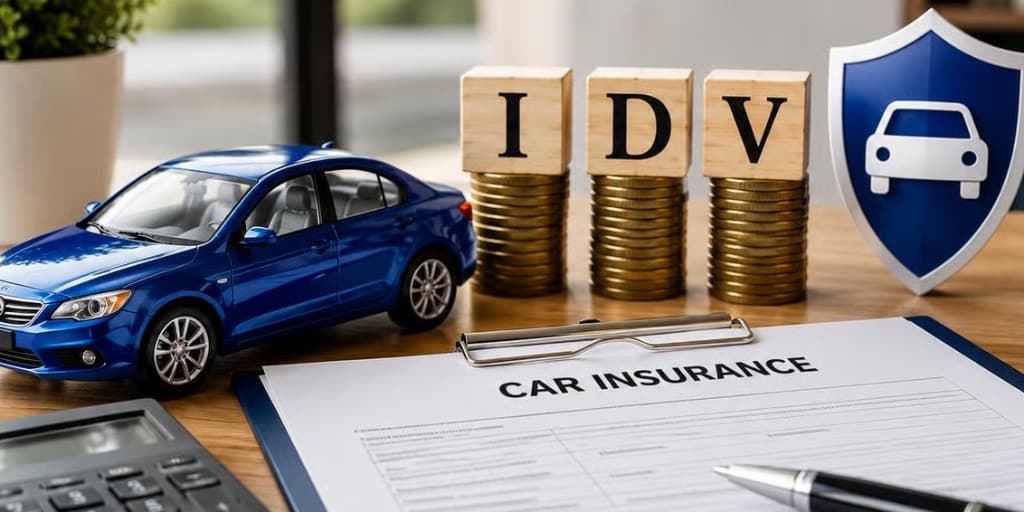
If you have ever bought or renewed a car insurance policy, you surely would have seen the IDV figure on your screen. Most car owners glance at it for a second and move on. Yet this single number decides two of the most important things about your policy. How much premium you pay this year, and how much money you receive if your car is stolen or completely destroyed.
Getting the IDV wrong is the most expensive mistake an Indian car owner can make. Set it too low and your claim payout falls short by Rs 50,000 to Rs 1.5 lakh. Set it too high, and you end up paying an extra premium for years. This complete guide explains what IDV is, along with breaking down how IDV is calculated and how it affects both your premium and your claim.
What is IDV in Car Insurance?
IDV in car insurance stands for Insured Declared Value. It is the maximum amount your insurer will pay you if your car is stolen, written off in an accident, or destroyed beyond repair. Think of IDV as the agreed market value of your car for that policy year. It is not the ex-showroom price. It is not the on-road price. It is the depreciated value of your car as of the day you buy or renew the policy.
The insured declared value is therefore fixed for one full policy year. If you make a total-loss claim during that year, the insurer pays this IDV, minus any compulsory deductible. The IDV does not change mid-year, even if your car's market value changes.
Every car insurance quote you receive online or offline mentions an IDV. Most platforms show a suggested IDV range, usually with a slider that lets you raise or lower the number within 5 to 10%. The right approach, therefore, is to stay within this band and not push the figure too far in either direction. In short, IDV is the financial promise behind your car insurance. The bigger the promise, the higher the premium, and the bigger the safety net during a major claim.
How is IDV Calculated: The Formula
The IDV formula used by every insurer in India is straightforward. It is based on the car's ex-showroom price and IRDAI's official depreciation schedule.
IDV = (Ex-Showroom Price + Accessories Cost) x (1 - Depreciation Rate)
The ex-showroom price is the price at which the manufacturer sold the car when it was new. Accessories added after purchase, such as a music system or alloy wheels, can be added separately to the IDV calculation, but each comes with its own depreciation curve.
The depreciation rate depends on the age of your car. A 6-month-old car has only 5% depreciation. A 4-year-old car has 50% depreciation. Beyond five years, the IDV is mutually agreed upon between you and the insurer based on the car's condition.
Road tax and registration costs are not part of the IDV calculation. This is why IDV is always lower than the on-road price you originally paid. The gap between IDV and ex-showroom price is what the return-to-invoice add-on covers if you take it, depending upon the policy terms. This is because in the event of theft or total loss, a standard RTI explicitly covers the ex-showroom cost plus the registration fees, road tax, and sometimes even the original insurance premium costs (depending on the insurer's specific product filing).
IRDAI Depreciation Rate Table by Car Age
Below is the official IDV depreciation rate schedule used by all general insurers in India. This is the same table whether you buy from a digital insurer like ACKO or a traditional name like ICICI Lombard.
| Car Age | Depreciation Rate | IDV as a percentage of Ex-Showroom Price |
|---|---|---|
| Less than 6 months | 5% | 95% |
| 6 months to 1 year | 15% | 85% |
| 1 to 2 years | 20% | 80% |
| 2 to 3 years | 30% | 70% |
| 3 to 4 years | 40% | 60% |
| 4 to 5 years | 50% | 50% |
| More than 5 years | Mutually agreed | Varies by condition |
For those wondering how is IDV calculated for 5 year old car situations, the table above is the best answer. A car that has just crossed five years will sit at the 50% IDV mark and start moving into the mutually agreed zone after that.
For cars older than five years, the insurer's surveyor may inspect the car physically. Factors like mileage, accident history, body condition, and service records play a role in arriving at a final IDV.
How IDV Affects Your Insurance Premium
IDV is the biggest single factor in your own damage premium portion. The relationship of IDV is direct and proportional to your total insurance premium. A higher IDV means a higher premium. A lower IDV means a lower premium. To better understand the IDV impact on premium becomes, let us consider an example of a Honda City worth a fair market value of Rs. 10 lakh
- At an IDV of Rs 10 lakh: Own damage premium around Rs 9,500
- At an IDV of Rs 9 lakh: Own damage premium around Rs 8,800
- At an IDV of Rs 8 lakh: Own damage premium around Rs 8,100
A Rs 1,400 reduction by lowering the IDV from Rs 10 lakh to Rs 8 lakh might feel like a win. However, the catch is that if your car is stolen during the policy year, you receive Rs 8 lakh instead of Rs 10 lakh. The Rs 1,400 saved on the premium will ultimately cost you Rs 2 lakh later. That is the risk of lowering the IDV, and that is also why smart buyers avoid the temptation to drop IDV just for a small premium discount.
How IDV Affects Your Claim Amount
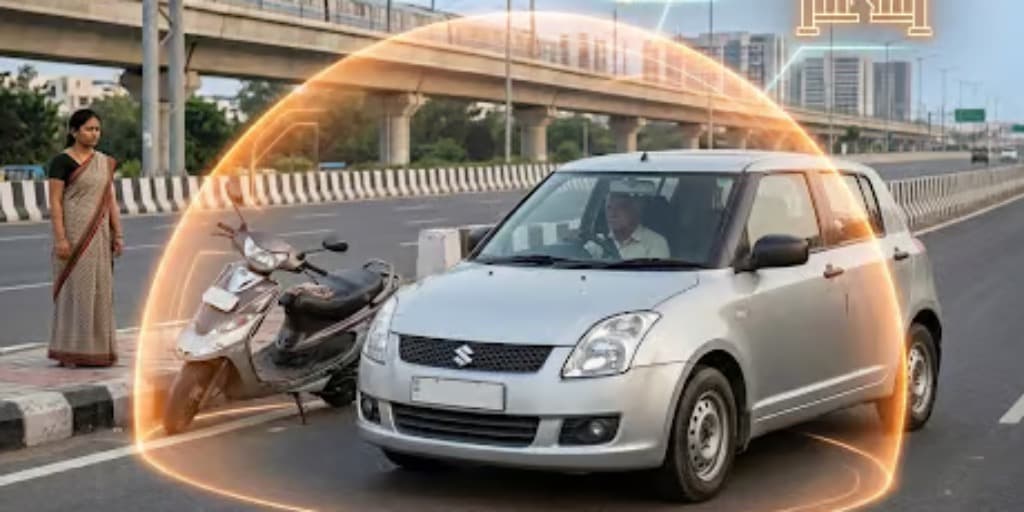
When it comes to car insurance in India, IDV is the ceiling for two types of payouts. These include theft claims and total loss claims.
- Theft claim: If your car is stolen and not recovered, the insurer pays the IDV minus any compulsory deductible. There is no separate negotiation.
- Total loss claim: If your car is damaged so badly that repair costs exceed over 75% of the IDV, the insurer treats it as a total loss. The payout is the IDV minus the salvage cost and not the repair estimate.
The IDV impact on claim becomes critical here. A low IDV means a smaller cheque, even though your car is worth more in the open market. There is no second chance to argue.
The IDV stated on your policy is final, even though the IDV vs market value gap is where most disputes happen. The market value of your car may be Rs 7.5 lakh. But if your policy lists an IDV of Rs 6 lakh, the insurer pays Rs 6 lakh. This is the heart of the low IDV risk that experienced agents warn you about. Every rupee you cut from IDV is a rupee subtracted from your maximum payout.
Setting the Right IDV: Not Too High, Not Too Low
The correct IDV for car insurance follows the Goldilocks rule: set it neither too high nor too low. Just right.
- Setting IDV too low to save Rs 1,500 in premium is the most common mistake. The premium savings are real but small. The risk is much larger. A low IDV creates a Rs 50,000 to Rs 2 lakh shortfall during a major claim.
- Setting IDV too high to feel safer is another trap. Some platforms allow you to raise the IDV by 5 to 10%. However, by doing so, you will end up paying an extra premium for years.
The right approach is therefore to use the standard suggested IDV from a reliable platform. Adjust by 5% up or down only if you have a clear reason, such as a recent upgrade to the car or a major accessory addition. Always check the IDV vs ex-showroom price gap and the IDV vs market value of your specific car model on listing portals like OLX or CarTrade for a reality check.
IDV for Used and Second-Hand Cars
IDV for used cars works the same way as for new cars. The depreciation schedule applies based on the car's age, not the purchase date. So if you buy a 4-year-old car, the IDV will be roughly 50% of the original ex-showroom price.
For very old cars, the IDV is decided through a survey. The insurer's surveyor inspects the car and arrives at a fair value. Factors that influence this number include the car's running mileage, service records, body condition, paint, accident history, and how well it has been maintained.
Buyers often wonder can I increase IDV after buying a used car? The answer is yes, you can request a slightly higher IDV at the time of policy purchase or renewal, usually within a 5 to 10% band. Beyond that, the insurer will require justification, like documented refurbishments or recent major part replacements. Always demand a fair IDV when insuring a used car. Some dealers push lower IDVs to keep the premium attractive, knowing the buyer rarely checks. A low IDV may save Rs 1,500 today, but cost you Rs 80,000 if the car is stolen six months later.
Navigating IDV During Insurance Renewals
IDV in car insurance is one of those small details that quietly decides the success or failure of your policy. A correctly set IDV gives you a fair premium today and a fair payout tomorrow. A wrong IDV either drains your pocket every year or leaves you short during a claim.
The IDV meaning car insurance experts care about is exactly this: the size of the safety net you carry with you on every drive. By using the official depreciation table and following the goldilocks rule, you can ensure that IDV is no longer a confusing mystery but a clear reality that you can master for as long as you own your car.
Note: This article has been vetted by Siddarth Khandelwal, an Insurance expert at Insure24.
FAQs
Q. What is IDV in car insurance?
IDV stands for Insured Declared Value. The IDV meaning car insurance buyers should remember is simple. It is the maximum amount you receive if your car is stolen or fully destroyed in an accident, after policy terms, deductibles, and insurer conditions are applied during claim settlement.
Q. How is IDV calculated?
IDV is calculated using the car’s ex-showroom price after deducting depreciation based on the vehicle’s age. IRDAI’s standard depreciation table is followed by insurers across India. Accessories not fitted by the manufacturer may be valued separately depending on the policy and insurer guidelines.
Q. What happens if IDV is too low?
A low IDV may slightly reduce your insurance premium, but it can significantly reduce your claim payout during theft or total loss. This can create a financial shortfall ranging from Rs 50,000 to Rs 2 lakh, forcing you to pay the remaining amount from your own savings.
Q. Can I increase IDV on my policy?
Yes, you can increase the IDV of your car insurance policy, but only within the insurer’s permitted range, usually around 5 to 10% above the standard value. Any increase beyond that often requires additional justification, vehicle inspection, or supporting market valuation documents from the insurer.
Q. Is IDV the same as market value?
No. IDV is the insured value agreed upon between you and the insurer using IRDAI depreciation guidelines. Market value, however, refers to the actual resale price of your car in the current used-car market. While both values may be similar, they are not always exactly the same. Nonetheless, the IDV agreed between you and your insurer is fixed and must be paid in event of a total loss.
Q. What is IDV vs ex-showroom price?
The ex-showroom price is the original purchase price of the car when it was brand new, excluding registration and insurance charges. IDV, however, represents the car’s current depreciated insurance value. As the car gets older, the difference between the ex-showroom price and IDV becomes much larger over time.
Q. How is IDV calculated for a 5 year old car?
A five-year-old car generally attracts around 50% depreciation under IRDAI guidelines. This means the IDV is usually close to half of the original ex-showroom price. For vehicles older than five years, insurers typically determine IDV through mutual agreement, physical inspection, and current market condition assessment.
Q. Does IDV affect my NCB?
No. NCB, or No Claim Bonus, depends entirely on the number of claim-free years under your car insurance policy. It is applied as a discount on the own damage premium. Although IDV influences the premium amount, it does not directly impact NCB calculation rules or eligibility criteria.
Q. Can two insurers offer different IDVs for the same car?
Yes. Although insurers use the same IRDAI depreciation guidelines, the suggested IDV for the same vehicle may vary slightly between companies. This difference occurs because insurers use different internal valuation methods, market data, and underwriting practices. Comparing quotes carefully can help you choose better coverage and pricing.
Q. Should I match my IDV to my car loan amount?
Not necessarily. IDV should reflect your car’s realistic market value rather than the outstanding loan balance. If your loan amount is higher than the insured value, you may still owe money after a total loss claim. In such cases, gap insurance or return-to-invoice add-ons can provide extra protection.
Q. Does IDV reduce mid-policy?
No. Once your car insurance policy is issued, the IDV remains fixed for the entire policy period and does not reduce midway. Even if your car continues ageing during the year, the insured value is recalculated only when you renew the policy at the end of the term.
Q. Why does the IDV drop sharply after one year?
The IDV of a new car drops quickly because insurers apply the highest depreciation during the initial years of ownership. Depreciation can be up to 15% in the first year and around 20% in the second year, causing a noticeable decline in the insured value within 12 to 24 months.







Licenced by

COMPANY
PRODUCTS
RESOURCES
LEGAL
Cars24 Financial Services Private Limited
(Wholly owned subsidiary of Cars24 Services Private Limited)
Corporate Office - 6th Floor, SAS Tower-C, Ch Baktawar Singh Road, Medicity Sector 38, Shivaji Nagar,
Gurgaon - 122001, Haryana
IRDAI Corporate Agency Registration No: CA0710 | License Category: Composite |
CIN: U65990HR2018PTC075713
Disclaimer : The information contained in this website is presented purely for information purposes only provided as service to the internet community at large. It does not constitute insurance advice and we do not guarantee the accuracy, adequacy or the completeness of the information contained here.


Licenced by
COMPANY
PRODUCTS
RESOURCES
LEGAL
Cars24 Financial Services Private Limited
(Wholly owned subsidiary of Cars24 Services Private Limited)
Corporate Office - 6th Floor, SAS Tower-C, Ch Baktawar Singh Road, Medicity Sector 38, Shivaji Nagar,
Gurgaon - 122001, Haryana
IRDAI Corporate Agency Registration No: CA0710
License Category: Composite
CIN: U65990HR2018PTC075713
Disclaimer : The information contained in this website is presented purely for information purposes only provided as service to the internet community at large. It does not constitute insurance advice and we do not guarantee the accuracy, adequacy or the completeness of the information contained here.