


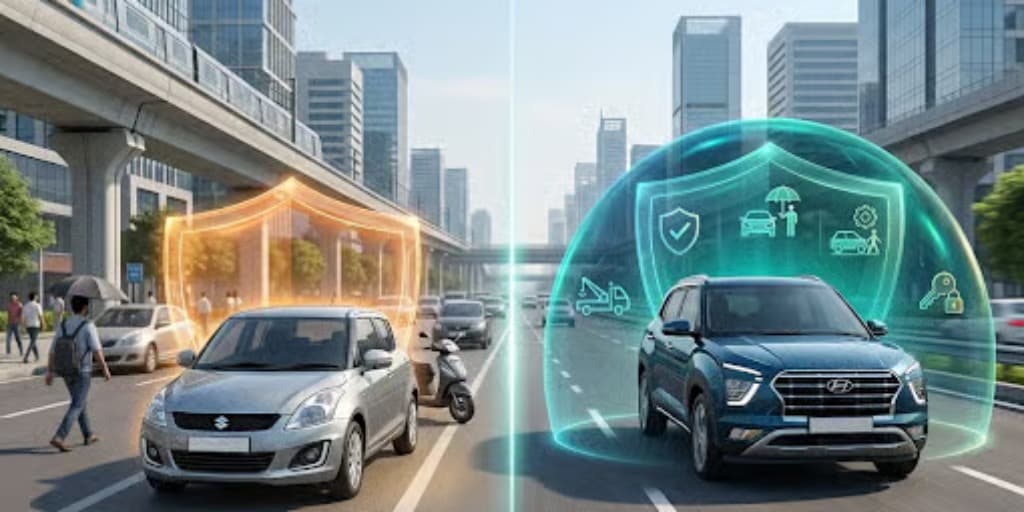
Every car owner in India faces the same question at the time of buying or renewing a policy. Should I go with a basic third-party plan or pay extra for full comprehensive cover? This is the single most important call you will make about your car insurance, and the wrong choice can cost you lakhs of rupees later.
The good news is that the answer is not the same for everyone. A 12-year-old hatchback worth Rs 1.5 lakh does not need the same protection as a brand-new SUV worth Rs 28 lakh. Your car's age, value, financing, and your own risk tolerance all change the right answer.
This complete third party vs comprehensive car insurance breakdown is built to remove the confusion. We compare both plans across ten key parameters, with a real premium example, to give you a clear decision framework based on your car. By the end of this car insurance comparison, you will know exactly which plan fits your situation and why.
TP vs. Comprehensive: Which One Should You Choose?
If you are short on time, here is the straight answer. Choose comprehensive car insurance if your car is less than five years old, financed through a loan, valued above Rs 5 lakh, parked in a metro city, or used for daily long-distance driving. Choose third party car insurance only if your car is more than seven years old, has a market value below Rs 1.5 to 2 lakh, is rarely driven, and you can afford to repair or replace it from your own pocket without stress.
For the large middle group of cars aged five to seven years, the answer depends on the car's resale value, your driving habits, and your savings. In most such cases, a basic comprehensive plan with one or two add-ons still works out cheaper in the long run than paying for repairs out of pocket.
The TP vs comprehensive debate is rarely about which policy is better in general. It is about which policy is better for your specific car right now. The rest of this car insurance comparison helps you reach that exact answer.
What is Third-Party Car Insurance?
Third party car insurance is the most basic policy available in India. It is also the only one that is legally mandatory under the Motor Vehicles Act, 1988. The word "third party" refers to anyone other than you (the first party) and your insurer (the second party).
This means the policy pays for damage or injury caused by your car to other people, their vehicles, or their property. If you accidentally hit a scooter, a pedestrian, or a parked car, the insurer takes care of the financial cost. The premium for a third party policy is fixed every year by IRDAI in consultation with MoRTH, the insurance regulator. It depends only on your car's engine capacity. No insurer can charge you more or less than this fixed amount.
Third party car insurance coverage includes:
- Death or bodily injury to any third party
- Damage to third party property up to Rs 7.5 lakh
- Legal liability arising from such accidents
- Personal accident cover for the owner-driver up to Rs 15 lakh
What it does not cover:
- Damage to your own car from any cause
- Theft or burglary of your vehicle
- Fire, flood, earthquake, or other natural disaster damage to your car
- Damage from riots or man-made events
- Loss of personal items inside the car
The biggest weakness is clear. If your car gets damaged or stolen, you receive nothing. This is why a pure TP plan suits only those who can absorb the cost of repairing or replacing their car without financial stress.
What is Comprehensive Car Insurance?
Comprehensive car insurance is the wider, more popular choice. It combines two things into one policy. Third party liability cover and own damage cover for your own car.
The third party section works exactly the same way as above. The own damage section is where the extra value comes in. It protects your car against accidents, theft, fire, natural disasters, riots, and other risks. You can also attach add-ons like zero depreciation, engine protection, and roadside assistance to widen the cover further.
The comprehensive car insurance benefits include:
- All third party liabilities covered (legally mandatory portion)
- Damage to your own car from collisions and accidents
- Theft of the entire vehicle
- Fire and explosion damage
- Floods, cyclones, earthquakes, and other natural calamities
- Riots, strikes, terrorism, and other man-made disasters
- Damage during transit by road, rail, sea, or air
- Personal accident cover for owner-driver
- Optional add-ons for deeper protection
- No Claim Bonus discount of up to 50 per cent on renewal (only on own damage part)
What it does not cover:
- Regular wear and tear
- Mechanical or electrical breakdown
- Damage when driving without a valid licence
- Drunk driving accidents
- Damage during racing or stunts
- Damage caused by war or nuclear events
The premium in a comprehensive policy is higher because the cover is wider. But the financial protection is also far stronger. For new cars, financed cars, and high-value vehicles, comprehensive is the safer choice every single time.
The 10-Parameter Comparison
The 10-parameter comparison is the heart and soul of any honest TP vs comprehensive analysis. The table below covers the ten most important parameters where both third party and comprehensive plans differ from one another. Use it as a quick reference before you make your decision.
| Parameter | Third-Party Insurance | Comprehensive Insurance |
|---|---|---|
| Legal requirement | Mandatory under the MV Act | Not mandatory, but recommended |
| Third party liability cover | Yes | Yes |
| Own car damage cover | No | Yes |
| Theft cover | No | Yes |
| Natural disaster cover | No | Yes |
| Fire and explosion cover | No | Yes |
| Premium amount | Lowest (IRDAI fixed) | Higher (varies by IDV, car, location) |
| Add-ons allowed | No | Yes (zero dep, engine protect, RSA, etc.) |
| No Claim Bonus benefit | Not available | Up to 50 per cent discount (only on OD part) |
| Best suited for | Very old or low-value cars | New, financed, or high-value cars |
This 10-parameter view shows the real difference between third party and comprehensive plans. A third-party policy gives you the bare legal minimum at the lowest cost. A comprehensive policy gives you complete peace of mind at a higher cost. For most car owners, the comprehensive plan delivers more value per rupee spent because the coverage gap of a TP plan is simply too risky in modern Indian driving conditions.
Cost Difference and Premium Comparison: Real Life Examples
Numbers always speak louder than theory. Here is a look at a real-world example of the cost gap between the two plans for the same car:
Sample Car: Maruti Suzuki Swift VXI, 1200cc, 2024 model in Delhi
IDV: Rs 7,00,000
Third-Party Only Premium Annual TP premium (IRDAI rate for 1000cc to 1500cc): around Rs 3,416
Total payable (With GST): approximately Rs 4,031 per year
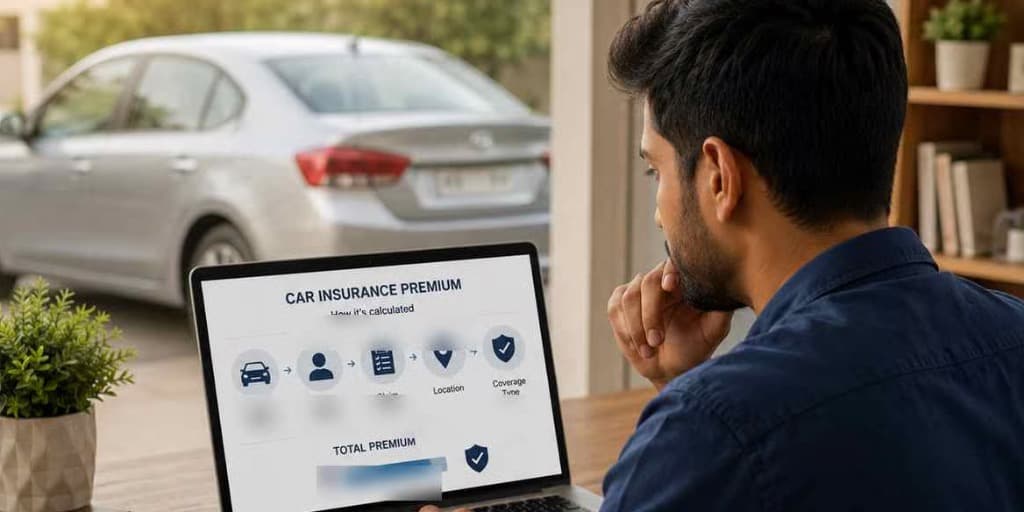
Comprehensive Premium Base own damage premium: around Rs 7,500 Third party premium: Rs 3,416 Personal accident cover: Rs 375 GST at 18 per cent: around Rs 1,795
Total payable: approximately Rs 13,323 per year
Now compare this to the financial risk. One small accident with body damage easily costs Rs 25,000 to Rs 50,000 in repairs. A theft of this car would cost you Rs 7 lakh out of pocket if you only had third party cover. Looking at it that way, the extra spending per year for comprehensive cover is one of the best financial trades available to a car owner.
The cost gap shrinks even more if you choose a higher voluntary deductible, maintain a clean claim record to build NCB, and renew on time without breaks. Many comprehensive policies for mid-segment cars in metro cities come down to around Rs 7,500 to Rs 9,000 in year four or five, thanks to NCB stacking.
Which Type of Insurance Policy in India Should You Buy?
A real car insurance comparison should not stop at differences. It should help you decide. Use this framework based on your car's profile.
New or Financed Car: Choose Comprehensive
If your car is less than five years old, the IDV is still high, and a major damage or theft event would hurt your finances badly. New cars also have premium parts and electronics that cost more to repair.
If your car is on loan, the bank or NBFC almost always requires comprehensive cover until the loan is fully paid. Banks treat the car as collateral. They want it protected against total loss until you finish your EMIs. In both cases, comprehensive insurance is the only sensible answer. Add zero depreciation for the first five years and return-to-invoice for the first three years to maximise protection.
Old Car (More Than Five Years): TP May Suffice
This is the tricky zone where many people often wonder is third party enough for old car? The honest answer is sometimes yes, sometimes no.
If your car is between five and seven years old, the market value is still reasonable, usually Rs 2 lakh to Rs 4 lakh for popular models. A small accident still costs Rs 20,000 to Rs 30,000 in repairs, which is well above the comprehensive premium difference. In such cases, comprehensive still makes sense, even if you skip premium add-ons.
If your car is more than ten years old, depreciated heavily, and worth less than Rs 1.5 lakh, the math changes. The premium difference may exceed the realistic claim amount, and a pure third party plan becomes acceptable. If you are still wondering is comprehensive insurance worth it for 10 year old car, then the simple answer is that in most cases it is. But only if the car is in great condition, used heavily, or parked in a high-risk area.
High-Value Car: Always Choose Comprehensive
If your car costs more than Rs 10 lakh, comprehensive is non-negotiable. Repair costs for premium vehicles are far higher because of imported parts, advanced electronics, and specialised labour. A small dent on a luxury sedan can cost Rs 40,000 to repair. A bumper replacement on an SUV can hit Rs 60,000. A water-logged engine can cost Rs 2 lakh.
For high-value cars, always stack comprehensive cover with zero depreciation, engine protection, return to invoice, and consumables cover. The annual premium might look heavy, but one claim recovers all of it instantly.
Can You Switch from TP to Comprehensive?
Yes, you can switch from a third party plan to a comprehensive plan, but the timing matters. The simplest path is to wait until your current third party policy is close to expiry. Get a comprehensive quote 30 days before expiry, compare it with your current TP renewal cost, and choose the better option.
If you want to switch mid-policy, you have two options. You can cancel the existing TP policy and buy a fresh comprehensive plan. Refunds in this case are calculated on a short-period scale, so you may lose part of the premium. Alternatively, you can let the TP policy run out and start comprehensive coverage on the day it expires.
A second route is the standalone own damage policy, also called TP vs OD insurance separation. Under this, you keep your existing TP cover and buy a separate own damage policy from any insurer. This gives you comprehensive-level protection without disturbing the TP plan. Many car owners use this method to switch own damage providers based on price and service, while keeping their long-term TP policy steady. It is a flexible option that became possible after the 2019 IRDAI unbundling rule.
Whichever route you take, never let your car run uninsured even for a single day. Driving without active coverage is illegal, risky, and may push you into break-in insurance with stricter inspection rules.
Third Party vs Comprehensive Coverage: The Bottom Line
The third party vs comprehensive car insurance question is not about choosing the "better" policy. It is about choosing the right policy for your specific car, your finances, and your driving life. A simple TP vs comprehensive view tells you the legal versus financial trade-off, and the decision framework above ties it to your actual situation.
For new cars, financed cars, and high-value vehicles, a comprehensive cover is the clear winner every time. For very old cars with very low market value, third parties can do the job at the lowest legal cost. The third party vs comprehensive car insurance call is finally a personal one, shaped by your car, your driving, and your finances.
Use the 10-parameter table, the premium example, and the decision framework in this car insurance comparison the next time you renew. A few minutes of clear thinking now can save you tens of thousands of rupees if something goes wrong tomorrow. Drive safe, insure smart, and revisit this guide every renewal cycle.
Note: This article has been vetted by Siddarth Khandelwal, an Insurance expert at Insure24.
FAQs
Q. Should I buy third party or comprehensive car insurance?
Choose comprehensive insurance if your car is less than seven years old, financed through a loan, worth more than Rs 3 lakh, or used regularly for commuting and travel. Comprehensive plans protect both your own car and third-party liabilities, making them more practical for most active drivers. Third-party insurance alone is usually suitable only for very old, low-value vehicles that are rarely driven and where repair costs can be comfortably handled out of pocket.
Q. Is third party car insurance enough?
Third-party insurance only satisfies the legal requirement under Indian motor laws by covering damage or injury caused to other people or property. However, it does not pay for repairs to your own vehicle after accidents, theft, fire, floods, or other damage. For most car owners, especially those driving daily in crowded cities or highways, third-party insurance alone is generally not enough because repair bills can become expensive very quickly.
Q. What is the main difference between third party and comprehensive?
The main difference is the scope of protection. Third-party insurance covers only liabilities toward other people, vehicles, or property if you cause an accident. Comprehensive insurance includes third-party coverage plus protection for your own car against accidents, theft, fire, vandalism, floods, storms, and many other risks. Comprehensive plans also allow useful add-ons like zero depreciation and engine protection, which are not available under basic third-party policies.
Q. Which is better, TP or comprehensive car insurance?
Comprehensive insurance is usually the better choice for almost every active car owner because it provides wider financial protection and peace of mind. While the premium is higher than a basic third-party policy, the additional cost is often small compared to the expense of repairing or replacing a damaged vehicle. Pure TP insurance is mainly suitable for very old cars with low resale value or vehicles that are driven only occasionally.
Q. Is comprehensive insurance worth it for a 10 year old car?
Comprehensive insurance can still be worthwhile for a 10-year-old car if the vehicle is well-maintained, has a market value above roughly Rs 1.5 lakh, and is used frequently. It helps avoid major repair expenses after accidents or natural disasters. However, if the car’s value is very low and repair costs are manageable for you, a third-party policy combined with personal emergency savings may be a more cost-effective option.
Q. Can I get add-ons on a third party policy?
No, add-ons are generally not available with a pure third-party insurance policy. Features such as zero depreciation cover, roadside assistance, engine protection, return-to-invoice cover, consumables cover, and NCB protection are offered only with comprehensive insurance or standalone own-damage policies. If you want enhanced protection and convenience benefits, you will need a broader policy type instead of basic third-party coverage alone.
Q. Will my NCB transfer if I switch from TP to comprehensive?
No Claim Bonus (NCB) applies only to the own-damage portion of car insurance premiums. If you currently have only a third-party policy, there is no own-damage premium component on which NCB can accumulate. Therefore, when you switch from pure TP insurance to a comprehensive plan, your NCB starts from zero, and you begin earning discounts from the first claim-free year under the new comprehensive policy.
Q. What is TP vs OD insurance?
TP stands for third-party insurance, which covers liabilities arising from damage or injuries caused to others. OD stands for own-damage insurance, which protects your own vehicle against accidents, theft, fire, natural disasters, and similar risks. A comprehensive insurance policy combines both TP and OD coverage into one plan. A standalone OD policy, on the other hand, covers only your own car and must be paired with a separate third-party policy.
Q. How much more expensive is comprehensive plan than TP?
For most mid-range cars in India, comprehensive insurance generally costs three to five times more than a basic third-party policy. The actual premium difference depends on several factors, including the car’s insured declared value (IDV), age, city of registration, claim history, engine size, and selected add-ons. Although the premium is higher, comprehensive insurance offers significantly broader financial protection against expensive repairs and unexpected losses.
Q. Can I switch to TP at renewal to save money?
Yes, you can switch from comprehensive insurance to a third-party-only policy at the time of renewal if you want to reduce premium costs. However, you should carefully evaluate the trade-off because the savings may only amount to a few thousand rupees annually, while you completely lose protection for your own car. This option usually makes sense only for very old, low-value vehicles where repair or replacement costs are relatively manageable.
Q. Does third party cover damage from natural disasters?
No, third-party insurance does not cover any damage to your own car, including losses caused by floods, earthquakes, cyclones, storms, or other natural disasters. It only pays for third-party liabilities arising from accidents involving your vehicle. To receive protection against natural calamities and weather-related damage to your own car, you need a comprehensive insurance policy or a standalone own-damage cover along with mandatory TP insurance.
Q. Is comprehensive insurance mandatory for car loans?
In many cases, banks and NBFCs require borrowers to maintain comprehensive car insurance throughout the loan tenure because the vehicle serves as collateral for the loan. Comprehensive coverage protects the lender’s financial interest if the car is damaged, stolen, or declared a total loss. The exact requirement depends on the lender and loan agreement, so it is important to carefully review your financing terms before changing or downgrading your policy.
Q. Can I cancel comprehensive and buy TP mid-policy?
Yes, it is technically possible to cancel a comprehensive insurance policy mid-term and replace it with a third-party-only policy. However, insurers usually calculate refunds using a short-period cancellation scale, which means the refund amount may be much lower than expected. In most situations, it is financially wiser to continue the comprehensive policy until renewal and then decide whether switching to TP-only coverage still makes sense.





Licenced by

COMPANY
PRODUCTS
RESOURCES
LEGAL
Cars24 Financial Services Private Limited
(Wholly owned subsidiary of Cars24 Services Private Limited)
Corporate Office - 6th Floor, SAS Tower-C, Ch Baktawar Singh Road, Medicity Sector 38, Shivaji Nagar,
Gurgaon - 122001, Haryana
IRDAI Corporate Agency Registration No: CA0710 | License Category: Composite |
CIN: U65990HR2018PTC075713
Disclaimer : The information contained in this website is presented purely for information purposes only provided as service to the internet community at large. It does not constitute insurance advice and we do not guarantee the accuracy, adequacy or the completeness of the information contained here.


Licenced by
COMPANY
PRODUCTS
RESOURCES
LEGAL
Cars24 Financial Services Private Limited
(Wholly owned subsidiary of Cars24 Services Private Limited)
Corporate Office - 6th Floor, SAS Tower-C, Ch Baktawar Singh Road, Medicity Sector 38, Shivaji Nagar,
Gurgaon - 122001, Haryana
IRDAI Corporate Agency Registration No: CA0710
License Category: Composite
CIN: U65990HR2018PTC075713
Disclaimer : The information contained in this website is presented purely for information purposes only provided as service to the internet community at large. It does not constitute insurance advice and we do not guarantee the accuracy, adequacy or the completeness of the information contained here.